

In partnership with



Direct impact from the hackathon
All three winning projects went on to real-world deployment.
AI-powered tool for UN policy analysts to process geospatial and socioeconomic data
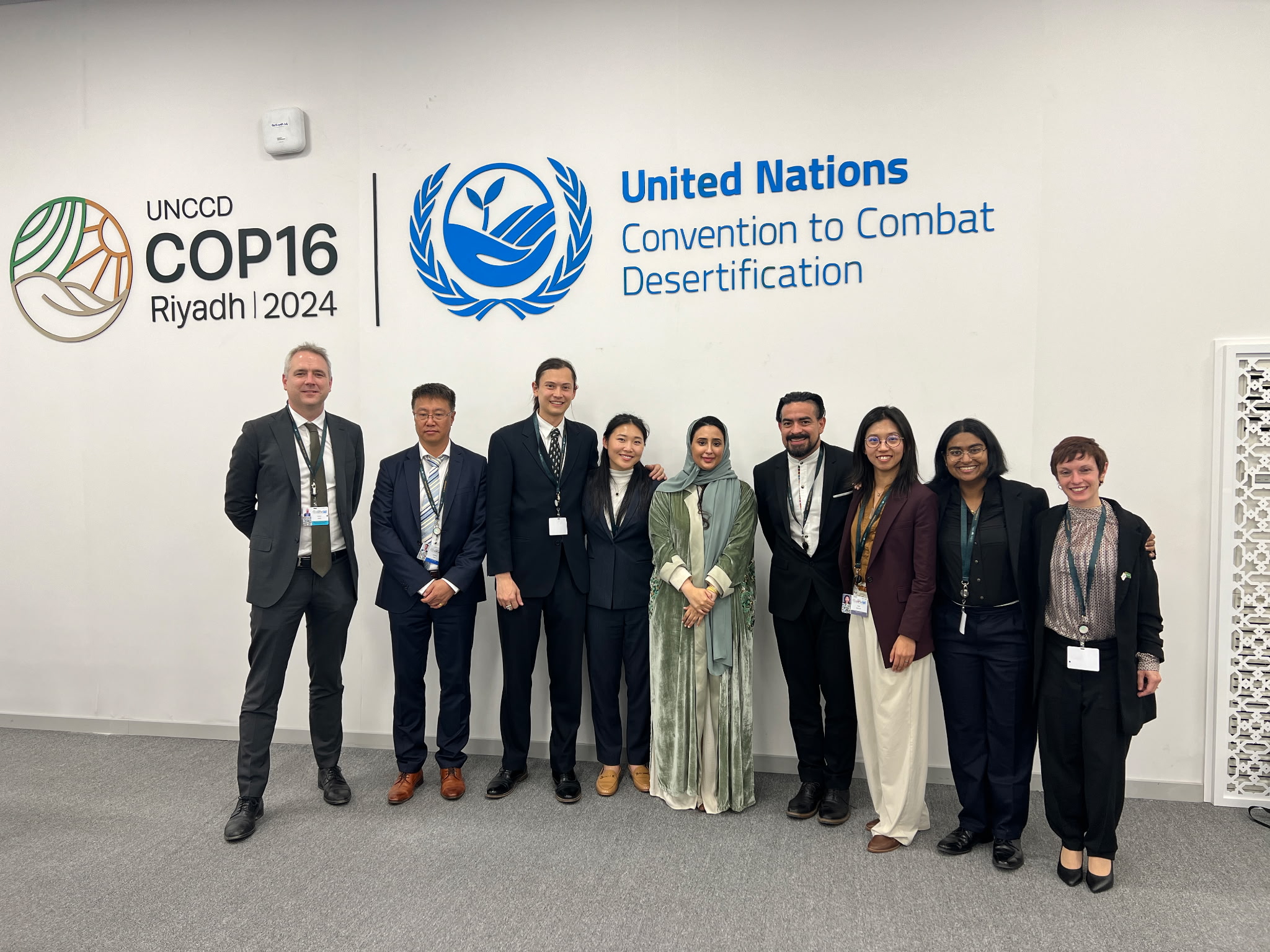
COP16 is the UNCCD's decision-making conference, where national delegations, policymakers and country leaders set global land policy. The team presented as part of the Arboren initiative.
Reading architectural plans automatically so affordable housing can be approved and built faster
The team took the hackathon prototype into Y Combinator to keep developing it as scalable infrastructure. bild.ai reads architectural plans and drawings to work out what a project needs to be permitted and what it will cost — the fragmented, jurisdiction-by-jurisdiction work that makes affordable housing slow and expensive to bring to market.
Searchable database with AI-driven insights for tenant rights advocates
CLSEPA was awarded a multi-thousand dollar grant to finish the technical implementation, and the tool is being deployed in legal clinics to help individuals understand their tenant rights cases directly.
Sponsored by







Select problem statements
Complex interactions between land degradation, drought, and people
How does land degradation affect natural disasters such as drought? How does it impact the lives of people in economic and social indicators? How effective is land restoration in different areas in leading to economic growth and economic well-being? Can tools be built to help in the analysis of these factors?
Fast and accurate AI translation of important UN documents in highly technical contexts
UN documents are domain specific and involve complex concepts not common enough in most language models to be readily translated accurately. Build natural language systems that can learn from existing official documents and translate these documents into other UN official languages or tools to assist official translators in producing accurate documents.
Unraveling the complexity of building codes that make new housing construction difficult and costly
Each jurisdiction in California has a different building code that developers have to follow to construct new housing creating a fragmented and confusing space for new housing to be built. If it is possible to create a system that can clearly organize and display differences in building codes it would be an immense help to affordable housing construction and policy change.
Over $45,000 in Prizes & Credits

First Place

Second Place

Third Place
Project Grant: collaborate with the nonprofit to complete the project to a deployable state (best faith effort).
Microsoft for Startup Prizes
First Prize
$25,000 in Azure credits
Second Prize
$5,000 in Azure credits
Fetch.ai Technology Prizes
Awarded for the best use of Fetch.ai technology
Fetch.ai AI Agents for Global Good Prize
- $1,000 Cash Prize
- Interview Opportunity
- 50 Agents, 1M Messages, and 200K Seconds of computation time on Agentverse for 1 month
Fetch.ai AI Agents for Social Transformation Prize
- $500 Cash Prize
- Interview Opportunity
Fetch.ai AI Agents for Environmental Change Prize
$500 Cash Prize
Fetch.ai Impact Maker Prize
$5,000 Project Grant
What people said.
It was really heartwarming seeing all the creative solutions participants came up with! I loved seeing the different ways people used tech and AI for social good, it reminds me why we do the work we do.
— Aiden Low, OpenAIGreen Policy Agent started as a quick prototype during the hackathon, but it's grown into something way bigger. Presenting our work as Arboren at the UN Convention to Combat Desertification's COP 16 gave us a huge boost. We got to share our approach to mapping environmental policies and making land data more accessible. Since then, we've kept working on it with nonprofits, researchers, and VCs who see the potential. Hack for Social Impact set the stage for ongoing, real-world change.
— Anu ThirunarayananContact
We would love to hear from you, whether you are a nonprofit, a sponsor, press, a participant, or have something else in mind.